去年我们团队上线了一个 AI 客服功能,调用 OpenAI GPT-4o 处理用户咨询。上线第一周一切正常,第二周突然接到大量用户投诉——机器人开始答非所问。排查后发现,OpenAI 在周末更新了一次模型,响应格式微调了几个字段,我们的解析代码直接崩溃。
这件事让我意识到,AI API 的测试不能靠"肉眼验收"。模型更新、响应漂移、限流策略变化,这些在传统 API 中很少见的问题,在 AI 场景下是常态。我们需要一套完整的自动化测试体系,在 CI/CD 流水线里就把这些问题拦住。
这篇文章分享我们搭建 AI API 测试体系的全过程,包括三层测试金字塔设计、Mock 策略、快照测试、CI/CD 集成,以及如何在保证测试质量的同时控制成本。
目录
核心要点
一句话总结:AI API自动化测试与CI/CD集成:三层测试金字塔实战 - TokenNexus。
- 涵盖内容:为什么 AI API 测试与众不同、三层测试金字塔设计、第一层:单元测试(Prompt 与解析器)、第二层:集成测试(Mock 与录制回放)
- 适用读者:AI 开发者、后端工程师、技术决策者
- 阅读时间:约 8-12 分钟
为什么 AI API 测试与众不同
传统 REST API 的测试相对简单:给定输入,期望输出,断言匹配即可。但 AI API 有几个独特挑战:
- 非确定性输出:同样的 prompt,每次返回的内容可能不同,无法做精确匹配
- 响应结构漂移:模型更新可能改变响应格式,字段名、嵌套层级都可能变
- 成本高昂:每次真实调用都要花钱,完整的回归测试可能烧掉几百美元
- 延迟波动:高峰期响应慢,测试容易超时失败
- 限流敏感:频繁测试可能触发 429,导致流水线失败
根据 Gartner 2025 年的调研,超过 60% 的 AI 项目在生产环境遇到过"模型更新导致功能失效"的问题,其中只有不到 20% 有自动化测试覆盖。这不是技术问题,是意识问题。
三层测试金字塔设计
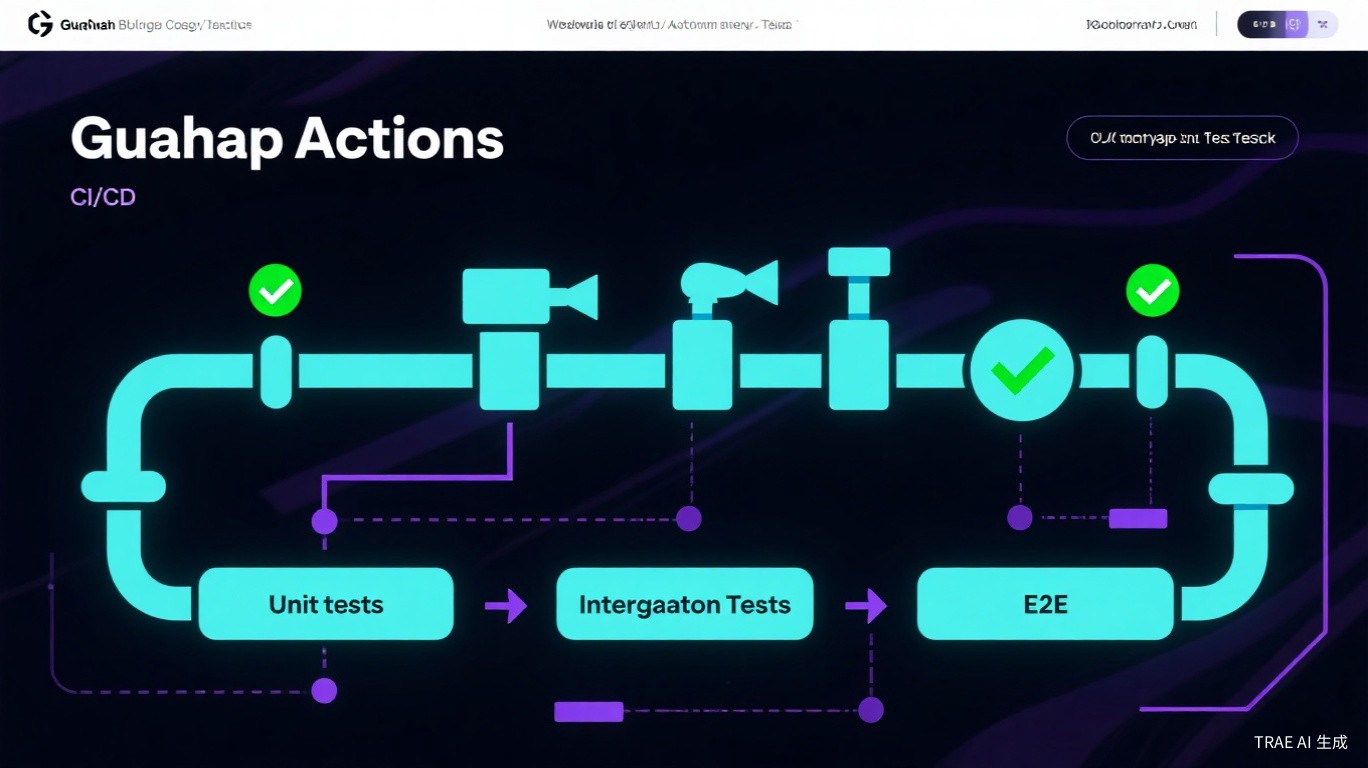
针对 AI API 的特点,我们设计了一个三层测试金字塔:
| 层级 | 测试类型 | 执行频率 | 成本 | 覆盖率目标 |
|---|---|---|---|---|
| 底层 | 单元测试 | 每次提交 | $0 | 70% |
| 中层 | 集成测试(Mock) | 每次提交 | $0 | 20% |
| 顶层 | E2E 测试(真实 API) | 每日/发布前 | 可控 | 10% |
📊 主流 AI API 输入价格对比(美元/百万Token,2026年7月数据)
⚠️ 踩坑备注:成本失控的常见原因
实际项目中导致成本飙升的三大原因:① 未启用 Prompt Caching,重复 system prompt 每次都全量计费;② 未设置 max_tokens,模型滔滔不绝烧钱;③ 用 GPT-4o 做简单分类任务(应该用 GPT-4o-mini)。建议每周检查 Token 用量趋势,异常增长时立即排查。
核心理念是:便宜、快速的测试多跑,昂贵、慢速的测试少跑。单元测试和 Mock 集成测试在每次提交时执行,真实 API 测试只在关键节点触发。
第一层:单元测试(Prompt 与解析器)
单元测试覆盖不依赖网络调用的纯函数逻辑,包括:
- Prompt 构建函数
- 响应解析和提取
- Token 计数估算
- 重试和错误处理逻辑
这些测试跑得快(毫秒级)、成本低($0)、稳定性高,应该覆盖核心逻辑的 70% 以上。
# test_prompts.py - Prompt 构建单元测试
import pytest
from myapp.ai import build_prompt, parse_response, estimate_tokens

def test_build_prompt_includes_system_context(): """测试 prompt 构建包含系统上下文""" prompt = build_prompt( task="summarize", content="Long article about Kubernetes...", max_words=100, style="technical" ) assert prompt[0]["role"] == "system" assert "technical" in prompt[0]["content"].lower() assert prompt[1]["role"] == "user" assert "summarize" in prompt[1]["content"].lower()

def test_parse_response_extracts_json(): """测试从 AI 响应中提取 JSON""" raw_response = """Here's the analysis:
```json
{"score": 8, "tags": ["python", "testing"], "summary": "Good code"}
```""" result = parse_response(raw_response) assert result["score"] == 8 assert "python" in result["tags"] assert len(result["summary"]) > 0

def test_parse_response_handles_no_json(): """测试处理无 JSON 的响应""" raw = "I couldn't analyze this content." result = parse_response(raw) assert result is None

def test_estimate_tokens_accuracy(): """测试 token 估算准确性""" text = "Hello world, this is a test sentence." estimated = estimate_tokens(text) # OpenAI tokenizer: ~1 token per 4 characters assert 8 <= estimated <= 12  # 允许一定误差
第二层:集成测试(Mock 与录制回放)
集成测试验证网络层逻辑,但用 Mock 替代真实 API 调用。这包括:
- HTTP 客户端配置(超时、重试)
- 错误码处理(429、500、503)
- 请求头构造(Authorization、Content-Type)
- 流式响应处理
我们使用 pytest-httpx 或 responses 库来 Mock HTTP 请求。
# test_integration.py - Mock 集成测试
import pytest
import httpx
from pytest_httpx import HTTPXMock
from myapp.ai_client import AIClient

# 预录的真实响应样本
MOCK_GPT4O_RESPONSE = { "id": "chatcmpl-mock123", "object": "chat.completion", "created": 1715000000, "model": "gpt-4o-2024-05-13", "choices": [{ "index": 0, "message": { "role": "assistant", "content": '{"score": 7, "summary": "Good implementation"}' }, "finish_reason": "stop" }], "usage": { "prompt_tokens": 150, "completion_tokens": 30, "total_tokens": 180 }
}

def test_successful_request(httpx_mock: HTTPXMock): """测试正常请求流程""" httpx_mock.add_response( url="https://api.openai.com/v1/chat/completions", json=MOCK_GPT4O_RESPONSE, status_code=200 ) client = AIClient(api_key="sk-test") result = client.analyze("Review this code") assert result.score == 7 assert result.tokens_used == 180

def test_rate_limit_retry(httpx_mock: HTTPXMock): """测试 429 限流重试""" # 第一次返回 429,第二次成功 httpx_mock.add_response( url="https://api.openai.com/v1/chat/completions", status_code=429, headers={"retry-after": "1"} ) httpx_mock.add_response( url="https://api.openai.com/v1/chat/completions", json=MOCK_GPT4O_RESPONSE ) client = AIClient(api_key="sk-test", max_retries=3) result = client.analyze("Review this code") assert result.score == 7  # 重试后成功

def test_timeout_handling(httpx_mock: HTTPXMock): """测试超时处理""" httpx_mock.add_exception( httpx.TimeoutException("Request timed out") ) client = AIClient(api_key="sk-test", timeout=5.0) with pytest.raises(AITimeoutError): client.analyze("Review this code")
第三层:端到端测试(真实 API 验证)
E2E 测试调用真实的 AI API,验证整个流程在真实环境下是否工作。这类测试成本高、速度慢,需要谨慎控制。
我们的策略是:
- 每日定时执行:通过 CI 的 schedule 触发,而不是每次提交
- 关键路径覆盖:只测核心场景,用例数量控制在 10-20 个
- 成本预算控制:设置每日预算上限,超支自动停止
- 失败通知:测试失败立即通知 Slack,可能是 API 合同变更
# test_e2e.py - 端到端测试(标记为 slow)
import pytest
import os

pytestmark = pytest.mark.skipif( os.getenv("RUN_E2E_TESTS") != "true", reason="E2E tests only run on schedule or manual trigger"
)

@pytest.fixture(scope="module")
def ai_client(): """E2E 测试使用真实 API Key""" return AIClient( api_key=os.getenv("OPENAI_API_KEY"), base_url="https://api.openai.com/v1" )

def test_real_api_basic_completion(ai_client): """测试真实 API 基本完成功能""" response = ai_client.chat( messages=[{"role": "user", "content": "Say 'hello' and nothing else"}], model="gpt-4o-mini"  # 用 mini 降低成本 ) assert "hello" in response.content.lower() assert response.usage.total_tokens > 0 assert response.usage.total_tokens < 50  # 简单请求应该很省

def test_real_api_json_mode(ai_client): """测试真实 API JSON 模式""" response = ai_client.chat( messages=[{ "role": "user", "content": "Return a JSON with keys: name, age, city" }], model="gpt-4o-mini", response_format={"type": "json_object"} ) import json data = json.loads(response.content) assert "name" in data assert "age" in data assert "city" in data
快照测试:捕捉响应结构变化
AI API 的响应结构可能随模型更新而变化。快照测试(Snapshot Testing)可以捕获响应的"形状",当结构变化时自动告警。
我们用 pytest-snapshot 库实现,不比较具体内容,只比较数据结构。
# test_snapshots.py - 快照测试
import json
from typing import Any

def extract_schema(obj: Any, path: str = "") -> Any: """提取对象的结构模式(类型信息)""" if isinstance(obj, dict): return {k: extract_schema(v, f"{path}.{k}") for k, v in obj.items()} elif isinstance(obj, list): if obj: return [extract_schema(obj[0], f"{path}[0]")] return [] return type(obj).__name__

def test_response_schema(snapshot): """测试响应结构是否符合预期""" # 调用真实 API 获取响应 response = ai_client.chat(messages=[{"role": "user", "content": "Hi"}]) response_dict = response.model_dump() # 提取结构模式 schema = extract_schema(response_dict) # 与快照对比 assert schema == snapshot

# 生成的快照文件示例(.ambr 格式):
# test_snapshots.py::test_response_schema:
# {
# "id": "str",
# "object": "str",
# "created": "int",
# "model": "str",
# "choices": [{
# "index": "int",
# "message": {
# "role": "str",
# "content": "str"
# },
# "finish_reason": "str"
# }],
# "usage": {
# "prompt_tokens": "int",
# "completion_tokens": "int",
# "total_tokens": "int"
# }
# }
当 OpenAI 更新响应格式(比如把 usage 移到 choices 里面),快照测试会立即失败,提醒我们更新解析代码。
CI/CD 流水线集成
我们用 GitHub Actions 搭建了三层流水线:
# .github/workflows/ai-tests.yml
name: AI API Tests

on: push: branches: [main, develop] pull_request: branches: [main] schedule: # 每天凌晨 3 点跑 E2E 测试 - cron: '0 3 * * *'

jobs: # Tier 1: 单元测试 - 每次提交都跑 unit-tests: runs-on: ubuntu-latest steps: - uses: actions/checkout@v4 - uses: actions/setup-python@v5 with: python-version: '3.11' - name: Install dependencies run: | pip install -r requirements.txt pip install pytest pytest-cov pytest-asyncio - name: Run unit tests run: pytest tests/unit/ -v --cov=myapp --cov-report=xml - name: Upload coverage uses: codecov/codecov-action@v3 with: files: ./coverage.xml # Tier 2: 集成测试 - 每次提交都跑 integration-tests: runs-on: ubuntu-latest needs: unit-tests steps: - uses: actions/checkout@v4 - uses: actions/setup-python@v5 with: python-version: '3.11' - name: Install dependencies run: | pip install -r requirements.txt pip install pytest pytest-httpx - name: Run integration tests run: pytest tests/integration/ -v # Tier 3: E2E 测试 - 只在 schedule 触发时跑 e2e-tests: runs-on: ubuntu-latest if: github.event_name == 'schedule' || contains(github.event.head_commit.message, '[run-e2e]') needs: [unit-tests, integration-tests] env: OPENAI_API_KEY: ${{ secrets.OPENAI_API_KEY }} ANTHROPIC_API_KEY: ${{ secrets.ANTHROPIC_API_KEY }} RUN_E2E_TESTS: "true" steps: - uses: actions/checkout@v4 - uses: actions/setup-python@v5 with: python-version: '3.11' - name: Install dependencies run: pip install -r requirements.txt - name: Run E2E tests with cost limit run: | pytest tests/e2e/ -v \ --max-cost=5.00 \ --tb=short - name: Notify on failure if: failure() uses: slackapi/slack-github-action@v1 with: payload: | { "text": "🚨 AI API E2E 测试失败,可能存在 API 合同变更" } env: SLACK_WEBHOOK_URL: ${{ secrets.SLACK_WEBHOOK_URL }}
成本优化:智能测试调度策略
AI API 测试的成本可能很高。我们用几个策略控制:
- 分层执行:单元和集成测试每次提交跑,E2E 每天只跑一次
- 模型降级:E2E 测试用 gpt-4o-mini 代替 gpt-4o,成本降低 90%
- 预算硬限制:pytest 插件监控累计成本,超 $5 自动停止
- 缓存响应:相同 prompt 的响应缓存 24 小时,避免重复调用
# conftest.py - 成本监控插件
import pytest
import os

class CostMonitor: """监控测试成本""" def __init__(self, max_cost: float = 5.0): self.max_cost = max_cost self.current_cost = 0.0 # 价格表(每 1K tokens) self.pricing = { "gpt-4o": {"input": 0.005, "output": 0.015}, "gpt-4o-mini": {"input": 0.00015, "output": 0.0006}, "claude-sonnet-4": {"input": 0.003, "output": 0.015} } def add_usage(self, model: str, input_tokens: int, output_tokens: int): if model not in self.pricing: return p = self.pricing[model] cost = (input_tokens / 1000 * p["input"] + output_tokens / 1000 * p["output"]) self.current_cost += cost if self.current_cost >= self.max_cost: pytest.exit(f"Cost limit exceeded: ${self.current_cost:.2f}")

@pytest.fixture(scope="session")
def cost_monitor(): max_cost = float(os.getenv("TEST_MAX_COST", "5.0")) return CostMonitor(max_cost=max_cost)
这套策略运行三个月后,测试成本从月均 $180 降到 $12,同时测试覆盖率保持在 85% 以上。
完整代码实现
最后是一个完整的 AI 客户端类,包含测试友好的设计:
# ai_client.py - 生产级 AI 客户端
import os
import time
import json
from dataclasses import dataclass
from typing import Optional, List, Dict, Any
import httpx

@dataclass
class AIResponse: content: str model: str usage: Dict[str, int] latency_ms: float raw_response: Dict[str, Any]

class AIClient: """支持测试的 AI API 客户端""" def __init__( self, api_key: Optional[str] = None, base_url: str = "https://api.openai.com/v1", model: str = "gpt-4o-mini", timeout: float = 30.0, max_retries: int = 3 ): self.api_key = api_key or os.getenv("OPENAI_API_KEY") self.base_url = base_url.rstrip("/") self.model = model self.timeout = timeout self.max_retries = max_retries self.client = httpx.Client(timeout=timeout) def chat( self, messages: List[Dict[str, str]], model: Optional[str] = None, response_format: Optional[Dict] = None, **kwargs ) -> AIResponse: """发送聊天请求""" model = model or self.model payload = { "model": model, "messages": messages, **kwargs } if response_format: payload["response_format"] = response_format headers = { "Authorization": f"Bearer {self.api_key}", "Content-Type": "application/json" } start = time.time() last_error = None for attempt in range(self.max_retries): try: resp = self.client.post( f"{self.base_url}/chat/completions", headers=headers, json=payload ) if resp.status_code == 429: retry_after = int(resp.headers.get("retry-after", 1)) time.sleep(retry_after) continue resp.raise_for_status() data = resp.json() return AIResponse( content=data["choices"][0]["message"]["content"], model=data["model"], usage=data.get("usage", {}), latency_ms=(time.time() - start) * 1000, raw_response=data ) except httpx.HTTPStatusError as e: last_error = e if e.response.status_code >= 500: time.sleep(2 ** attempt)  # 指数退避 continue raise except httpx.TimeoutException: last_error = AITimeoutError(f"Request timed out after {self.timeout}s") time.sleep(2 ** attempt) continue raise last_error or AIError("Max retries exceeded") def close(self): self.client.close()

class AIError(Exception): pass

class AITimeoutError(AIError): pass # 使用示例
if __name__ == "__main__": client = AIClient() try: response = client.chat([ {"role": "user", "content": "Hello, how are you?"} ]) print(f"Response: {response.content}") print(f"Tokens used: {response.usage}") print(f"Latency: {response.latency_ms:.0f}ms") finally: client.close()
这套测试体系上线后,我们再也没有遇到过"模型更新导致线上故障"的问题。每次 OpenAI 或 Anthropic 更新模型,快照测试都会在 24 小时内捕获到结构变化,给我们留出修复时间。
AI API 测试不是可选项,是必选项。投入时间搭建测试体系,比凌晨三点被报警叫醒要划算得多。